Thursday, 9 July 2015
rexnews: Arsenal Transfer News: Mario Götze, Arturo Vidal, ...
rexnews: Arsenal Transfer News: Mario Götze, Arturo Vidal, ...: It has already been a positive summer for Arsenal in the transfer market, with key target Petr Cech arriving from Chelsea to give the club...

Arsenal Transfer News: Mario Götze, Arturo Vidal, Pedro, Ilkay Gundogan Linked In Latest Speculation
 It has already been a positive summer for Arsenal in the transfer market, with key target Petr Cech arriving from Chelsea to give the club a top-class goalkeeper with huge Premier League experience. More signings are expected, although there is plenty of speculation as to who is being targeted to aid the Gunners’ attempts to win a first Premier League title in 12 years.
A midfielder has long been thought to be on the agenda, with Arturo Vidal strongly linked with a transfer to north London. That interest would appear to have quietened of late and there was much talk in recent days that the all-action Juventus star was closing in on a move to Real Madrid. Yet Juventus chief executive Beppe Marotta has dismissed those claims.
“Vidal? It's just rumors, Real Madrid have not come forward,” he said, according to the Daily Mirror. “We have a great relationship with them.”
It would seem unlikely that Juventus would be willing to lose the Chile international, given they have just allowed Andrea Pirlo to go to New York City FC, while there continues to be speculation over the future of Paul Pogba. And there must also be doubts about whether Arsenal would be willing to put together a financial package sufficient to convince Juventus to sell and Vidal to move to the Emirates.
Arsenal’s list of midfield targets was widely believed to have at one stage included Borussia Dortmund’s Ilkay Gundogan. The Germany international had stated at the start of the summer that he would not be extending a contract that had just a year left to run, but that decision was reversed when last week he committed himself to the Bundesliga club for a further year. Yet that fact hasn’t stopped some reportsseizing on quotes from Gundogan about having “Wanted a new challenge” as reason for optimism for Arsenal.
However, the 24-year-old has stated that he will be remaining at Dortmund for the coming season, although he did leave the door open for interest next summer.
“The solution we found now provides security for all parties,” he told German magazine Kicker, per ESPN. “I can concentrate totally on football; the club know they will earn a reasonable fee if I make a move in 2016. That was important to me.”
Arsenal have also been surprisingly linked with another Germany international, in Mario Götze. The man who scored the winning goal in the 2014 World Cup final is floated as being a target for Arsenal, as well as Manchester United, by the Daily Star. The Tabloid’s assertion is based on comments from the 23-year-old’s agent stating that the player has lacked support at Bayern Munich. Götze has certainly struggled to make a real impression since his transfer from Borussia Dortmund two years ago -- before which he was linked strongly with Arsenal. However, the Gunners would be hugely surprising suitors given Arsene Wenger’s wealth of options in the attacking midfield positions -- including Alexis Sánchez, Mesut Özil, Aaron Ramsey, Theo Walcott, Jack Wilshere and Alex Oxlade-Chamberlain.
That strength in depth would also likely preclude a move for Barcelona’s Pedro. The winger’s future is uncertain following a frustrating season watching on as Luis Suarez, Lionel Messi and Neymar grabbed the headlines, as well as the recent signing of Arda Turan. And, citing stories in Spain, The Independent has reported that Arsenal have contacted Barcelona about the Spanish World Cup winner. He may well be on the market, but he wouldn’t appear to fill any of the priorities Wenger has for strengthening his squad ahead of what promises to be a crucial season for the Gunners.
By
Thursday, 2 July 2015
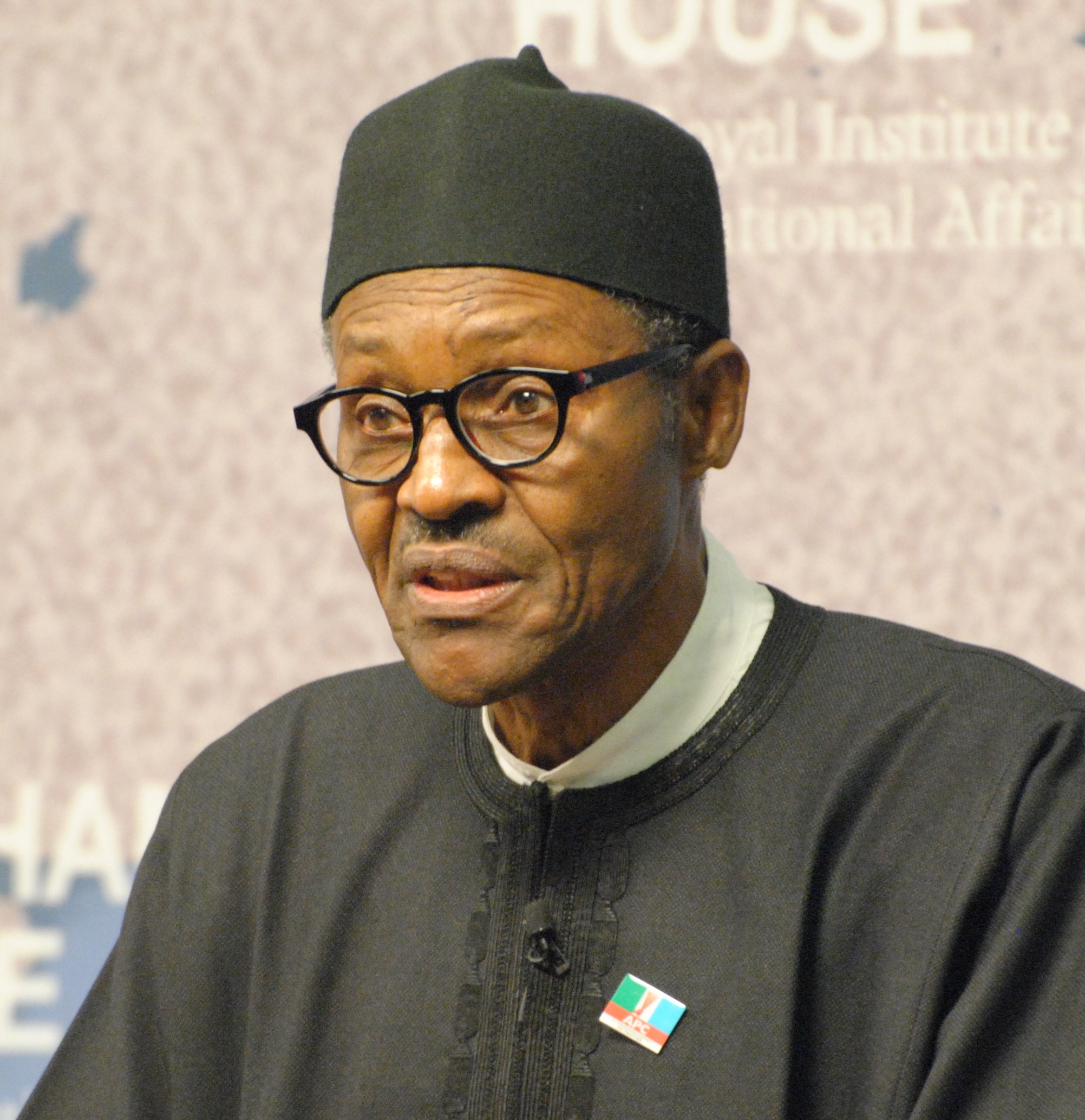
Buhari Goes From Nigeria’s Change Champion to ‘Baba Go Slow’
Daniel Magnowski
Nigerian President Muhammadu Buhari took office a month ago on a
wave of hope that he would quickly deal with a deepening economic crisis and an
Islamist insurgency in the north. So far, he hasn't met those expectations.
 While Africa’s biggest
oil producer has been hit by a 40 percent fall in petroleum prices in the past
year that has slowed economic growth and weakened the currency, Buhari, 72, has
delayed naming a cabinet until September. As the momentum of being the first
opposition candidate to win power at the ballot box fades, critics are mocking
him as a sluggish elderly man, or “Baba Go Slow.”
While Africa’s biggest
oil producer has been hit by a 40 percent fall in petroleum prices in the past
year that has slowed economic growth and weakened the currency, Buhari, 72, has
delayed naming a cabinet until September. As the momentum of being the first
opposition candidate to win power at the ballot box fades, critics are mocking
him as a sluggish elderly man, or “Baba Go Slow.”
Buhari has acknowledged
the crisis, saying last month that his government is facing severe financial
strain, with a Treasury that’s “virtually empty,” and his party is calling for
patience. Yet his lack of urgency in tackling economic woes could leave Nigeria
badly adrift, said John Ashbourne, an economist at Capital Economics in London.
“Every week that Nigeria
goes without a cabinet increases the chance that it will face a dangerous shock
-- whether a revenue collapse or a currency crisis,” Ashbourne said by phone
Tuesday. “Leaving the federation without a finance minister would be a
questionable choice at the best of times; doing so during a period of economic
instability is difficult to explain.”
Investor Displeasure
Nigeria’s currency, twice
devalued in the past year in an attempt to cope with lower oil income, has
weakened 7.7 percent against the dollar this year on the interbank market. The
International Monetary Fund estimates that growth will slow to 4.8 percent this
year from 6.1 percent in 2014. The naira was trading at 198.85 against the U.S.
dollar at 2.38 p.m. in Lagos.
The Nigerian Stock
Exchange Index hit its 2015 peak of 35,728.12 on April 2, the day after Buhari
was declared the election winner. Since then it has fallen 8 percent.
The cabinet delay won’t
please investors, said Alan Cameron, an economist at Exotix Partners LLP.
They’re expecting tighter fiscal policy, a currency devaluation and a greater
focus on tax collection after the drop in oil prices, he said.
“There was initially some
hope that Buhari would be able to tackle these changes more quickly and with
more credibility, but the time line has now been pushed back,” Cameron said by
phone from London. “It’s going to be a difficult pill to swallow for foreign
investors.”
Inertia Concern
The central bank has
banned importers from using the foreign-exchange market to buy certain goods as
it seeks to stabilize the naira and hold on to external reserves, which are
down 16 percent this year to $29 billion.
“Even what little could
have been achieved so far, such as the nomination of ministers, has not been
addressed, and there is a sense of inertia,” Folarin Gbadebo-Smith, managing
director of the Center for Public Policy Alternatives, a Lagos-based research
group, said by phone Wednesday.
Buhari’s own party, the
All Progressives Congress, has recognized the growing public disenchantment and
pleaded for patience.
“Nigerians are right to
demand even a faster pace. Nigerians are right to ask that a government be
quickly put in place,” party spokesman Lai Mohammed told reporters at a June 30
press conference in Lagos, the commercial capital. “All we ask for is a little
more patience, a little more understanding.”
Government Change
Buhari is facing a unique
situation because his victory over the incumbent, Goodluck Jonathan, ended 16
years of rule by the Peoples Democratic Party, his spokesman Femi Adesina said.
“This is not a normal
changeover, it is from one government to another,” he said.
Buhari, who previously
governed Nigeria as military ruler in the 1980s, has moved more quickly in the
fight against the Islamist militant group, Boko Haram, which has waged a violent
six-year campaign in the north.
He ordered the army to
move its headquarters from Abuja, the capital, to the northeastern city of
Maiduguri, the scene of some of the worst fighting, and has traveled to
neighboring countries such as Chad and Niger to discuss cross-border military
cooperation.
It’s the “one area in
which the Buhari administration has hit the ground running,” Mohammed said.
Yet, while troops from
Nigeria and Chad have largely dislodged Boko Haram from its self-declared
caliphate in the northeast this year, the insurgents have stepped up
hit-and-run attacks.
Corruption Fight
Buhari will also have to
deal with shortcomings in his own army, which Amnesty International said last
month should be investigated for war crimes, including unlawful killings.
In a step toward meeting
his campaign promise to attack corruption that has crippled Nigeria for
decades, Buhari disbanded the board of the state-run Nigerian National
Petroleum Corp. The National Economic Council on Monday set up a four-member
panel to probe its accounts.
Even some opposition
lawmakers say Buhari needs more time.
“His approach may be
different, but I am patient, I will give him some time,” Ben Murray-Bruce, a
PDP senator, said in a June 29 interview in Abuja.
Where Buhari has come up
short is communicating a sense of engagement to the public, said Gbadebo-Smith.
“He doesn’t say anything
about anything,” he said. “The public would be satisfied with signals that say
we are doing something about this, we are on top of this.”
Wednesday, 1 July 2015
Can you really do it all, starting a business is not for the fainthearted--PYB Naija

PYB Naija is a Nigerian based platform for online public relations.
Business Development has become a social experiment needing a high and aggressive social media presence.
We utilize our skills and expertise to expand your brand ideas across all networks our services include SEO optimization, advertising, SME Growth, Growth Hacking, Social Media Programs, Content Development and Blog Development and sales & marketing.
At PYB Naija our aim is to ensure market penetration Via the various Social Media Platforms Such as LinkedIn, Facebook, Twitter, Blogger, Pintrest, Flicker, DiggIt, StumbleUpon, Youtube etc.
Become Bold
goto PYB Naija to get started....
http://www.pybnaija.com
www.twitter.com/PybNaija
wwww.pintrest.com/keityla
www.instagram.com/pybnaija
www.facebook.com/pybnaija
Thursday, 25 June 2015
Miracle Baby!!! Mother, baby survive Colombia plane crash
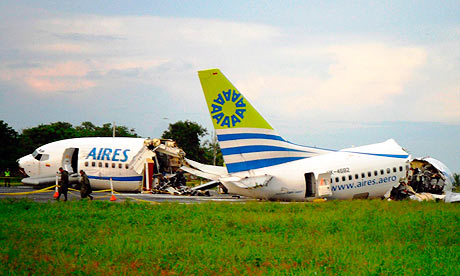
A mother and her infant son who disappeared in a plane crash in the dense jungle of western Colombia have been found alive and well five days later in what authorities
 have described as a “miracle”.
Nelly Murillo, 18, and her son Yudier Moreno, not yet one
year old, were found on Wednesday close to the site where the Cessna
303 crashed on Saturday in thick vegetation near Quibdo in the province
of Choco.
“It’s a miracle. It is a very wild area and it was a catastrophic
accident,” Colonel Hector Carrascal, the commander of the Colombian air
force in Antioquia, told AFP news agency
year old, were found on Wednesday close to the site where the Cessna
303 crashed on Saturday in thick vegetation near Quibdo in the province
of Choco..
“His mother’s spirit must have given him strength to survive.”
Murillo
and her baby were taken by helicopter to a nearby hospital with minor
injuries, said Carrascal, adding that he was stunned they were alive.
“The lady has wounds and minor burns and apparently the child is unharmed,” the Colombian air force said in a statement.
The plane’s pilot, Captain Carlos Mario Ceballos, died in the crash and rescuers found his body in the aircraft.
They discovered the doors of the plane ajar and suspected that survivors may have clambered out.
A 14-person search-and-rescue team scoured the dense forest before finding the mother and child.
The plane was travelling between Nuqui and Quibdo in western Colombia when it crashed.
-----June 25, 2015 : Aljazeera.com
Sunday, 21 June 2015
Advice From Xavi To Neymar--
The iconic midfielder offered
advice to his ex-club mate, instructing him to think about how he behaves on
the pitch, but hailed him as a hard working and humble player

Former Barcelona captain Xavi believes former team-mate Neymar must
think about how he acts on the pitch, insisting that what is acceptable in
Brazil does not go down well in Europe.
The
midfielder was referring to an altercation Neymar found himself involved in
during the final minutes of the Catalans' 3-1 Copa del Rey final win over
Athletic Bilbao, when the Basque players had taken offence at a piece of
extravagent skill he attempted.
And Xavi
used the example to question the 23-year-old's mentality, stating the
young Brazilian had to cut out the elements of his game that simply were
not tolerated in the European arena.
"He
needs to seriously think about how he should act. Maybe that sort of thing is
accepted in Brazil, but it's a thorny issue in Spain," Xavi told Sport .
 "He
should reflect about it because he's an extraordinary, hard-working and humble
lad, but he has that Brazilian attitude, according to which such things are
part of the show, while here they're seen as a lack of respect."
"He
should reflect about it because he's an extraordinary, hard-working and humble
lad, but he has that Brazilian attitude, according to which such things are
part of the show, while here they're seen as a lack of respect."
Neymar
has not only been accused of unsporting behaviour during his stint in Spain by
opponents but team-mates as well, with Xavi himself caught on video
berating the forward while Barcelona celebrated winning their treble with an
open top bus parade on Sunday.
"He
was trying to take my shoes off and they were pushing me when I was standing on
the edge of the bus. I told them to stop messing around and to focus on the
fans, since the parade is for them," he added.
"It's
alright to have three or four beers, but the parade is for the supporters, to
thank them, and you can't just be in your own world."
Saturday, 20 June 2015
A Letter From a White South African to White America
Dear
friend,
It has been an eerie thing for me these past few years: sort of
a déjà vu experience to watch the news and read about Ferguson, Eric Garner,
Baltimore riots, McKinney and, most recently, the horrific shooting in
Charleston. I've been watching #blacklivesmatter trend on Twitter: grief and
outrage and opinions from every corner. And, as someone who grew up in
Apartheid South Africa, this all feels eerily familiar. I listen to people talk
and think I remember, and I recognize that.
America
did away with legislated racism a few decades before South Africa did (I
remember reading many of the early U.S. cases in my constitutional law classes
in SA), but institutional racism is still alive and well, and people are
hurting.
I recognize the fear, the blaming, the use of "they"
and "them" in people's language. I remember hearing the voices of
brave voices in the black community appealing to people to listen, to learn, to please,
please acknowledge that there are hurts I don't see or understand.
I remember the talk of white privilege, and feeling unjustly accused by the
term. I remember grappling with what it meant to be regarded as an oppressor,
even though I was too young to have done any wrong myself.
I know
there are many differences between America and South Africa's histories: they
are complex narratives, woven in blood and ink. I do not write this as an
expert analyst, or as a political pundit -- but as one confessing there is so
much I don't know and understand. But, I offer the little I've learned living
in a country which shed tears and blood over race, and now living in another
doing the same:
That, even though I was raised as a "liberal" white
person, I was still a beneficiary of privilege. I still had more opportunities
than people with more melanin in their skin, just because of being born white.
I had not yet learned that we are all blind to our own privileges until we hear the stories
of those who have lived without. Just as we don't know what a
privilege it is to be able-bodied until we, or someone close to us, loses
significant body function, we don't know what white privilege is until we, or
someone close to us, experiences significant discrimination on the basis of
their skin color. For example, I didn't know until recently that even the color
of band aids reflected privilege: the "norm" is a skin-tone suited
for caucasians, not people of color.
That, just because I wasn't a hate-mongering "racist"
and even though I had friends of other races (I was one of the few who went to
a private, multiracial school in the 80s), didn't mean I knew what it was like
to be black. I had not yet learned to listen to people's stories.
That, even
though my mom did much to try and teach us not to use racial slurs (for
example, black men are not "boys"), there were still other
presumptions and prejudices and blind spots I carried because of the culture I
was born into.
That, even
though I believed in a gospel where "there is no male and female, slave
nor free, but we are all one in Christ Jesus" (Galatians 3:28), that there
was still a significant need for reconciliation and restoration within the
church. The denomination of which I was a part (REACH-SA) held a number of
meetings in the mid-nineties, seeking to discuss this very thing: what needed to
be done so that predominantly "white" churches" and
predominantly "black churches" within the same denomination could
have healed and whole relationships with each other. At first, I scoffed at the
need for such talks (Why do we need that? Haven't we all been forgiven by Jesus
and so we just forgive each other and move on?), to later on a deep and dawning
realization that just offering to have that conversation showed a humility, and
offered an olive branch, which had been sorely lacking. As it turned out, we
needed to say I'm sorry, even thought I hadn't realized there was an offense.
To you, beloved Americans, I offer this humble suggestion:
please learn something from South Africa's history in the current crisis. Read
Alan Paton's Cry, The Beloved Country. Read Nelson Mandela's Long Walk to Freedom.
Consider Desmond Tutu's words and example. Read Michael Cassidy. Read about the Truth and Reconciliation
Commission. Listen to what happened (and how the church responded) when a
group of terrorists walked into St. James Church and massacred the worshippers
there in 1993. South Africa is not a shining example in many respects, but
there are still so many lessons we can learn from each other.
Listen to the stories of the white families around you who are
adopting black children, and are learning in their own families about how their
darker skinned children are treated differently to their white ones (like Jen Hatmaker, Karen Yates,
and Kristen Howerton.
Listen to the words of writers like Austin Channing, and Osheta Moore,
who are seeking to be peacemakers (not trouble causers) by telling the stories
we need to hear about race. Acknowledge that if you are white, you have no idea what it's like to be not-white.
Can I also
gently say that you are not going to hear the stories that will move you
towards grace and better understanding if you are exclusively watching FOX
news. (Or reading Matt Walsh.) South Africa would never have been able to move
forward if we all just kept listening to the people we had always listened to.
We need to read and listen outside of our little circles. It was really only
when I had finished law school and was at seminary, side by side with South
Africans from every race group, and people were sharing their testimonies of growing
up that the penny really began to drop for me. I'm still trying to listen. It's
hard. God knows, I want to be a better listener than I've been.
I'm a long
time fan of Jodi Picoult's novels: I love the way she weaves together stories
about deeply divisive ethical issues, and places characters in her story who
represent various viewpoints on those issues. What amazes me about her writing
is how, as each chapter skips to a different character, their views make sense
to me when told from within their perspective. Her writing has made me realize
that everyone says and does things in accordance with their viewpoint, and that
differences of opinion are often less about who has the facts, and all about
where a person is coming from in viewing the facts.
I'm in my late 30s, and still learning how much my opinions have
been shaped by my being white and growing up in the predominantly white
communities and schools I did. Watching South Africa go through its painful
transition to democracy was the beginning of a lesson in needing to listen well
(and silently) to other's stories. The difference between a freedom fighter and terrorist is
really just a matter of perspective, isn't it?
I write
this with tears, prayer, and hopes that we can do better. Listen better. Love better.
Things are
not okay the way they are.
Subscribe to:
Posts (Atom)