Thursday, 9 July 2015

Nigeria’s President Opens the Door to Talks With Boko Whom?

KILLING JOKE

President Buhari’s expressed openness to talk with the terrorists could be a sign of weakness, a prelude to intensified war, or both.
ABUJA — The Nigerian government has declared it is ready to negotiate with the dreaded sect known as Boko Haram. The announcement, coming as it does so soon after a new spate of attacks by the group that has pledged allegiance to the so-called Islamic State, suggests that the recently elected government of Nigerian President Muhammadu Buhari is looking for a way out of confrontation. But there is certainly more to the story than that.
“If Boko Haram opts for negotiation, the government will not be averse to it,” Buhari’s spokesman, Femi Adesina, said in a statement released on Saturday. “Government will, however, not be negotiating from a position of weakness, but that of strength,” it said.
As if to add horrible punctuation marks to this reticent dialogue, at least 25 people were killed when a bomb blast ripped through a packed government office in the northwestern town of Zaria on Tuesday in a suspected suicide attack capping a week in which close to 300 people died in Boko Haram violence. Since Buhari was sworn in as president on May 29 the fanatics have killed an estimated 800 people.
The Nigerian government’s apparent willingness to speak with Boko Haram contradicts the earlier stance of Buhari, who promised during his campaign not to negotiate with the insurgents if elected president.
“Boko Haram is not interested in peace—if they are interested in peace, how can they kill 13,000 Nigerians?” Buhari told BBC News in February.
Now, the former general knows defeating the sect is not child’s play. And this could be a tactical move while Buhari is consolidating and preparing his own forces for an all-out assault on the jihadists. His spokesman gave a hint of that when he said in the statement “the machinery put in place, and which will be set in motion soon, can only devastate and decapitate insurgency.”
Boko Haram may have split into different factions, and officials risk negotiating with the wrong or less powerful group.
The message is not exactly “surrender or die,” it is more like “negotiate or die.” But even so there comes a critical question for the government: Negotiate with whom?
This is not the first time a Nigerian government tried dialogue with Boko Haram, and there have been a number of “fake” deals with militant groups in the past.
Last year, the administration of then-President Goodluck Jonathan claimed to have held a series of talks and reached a ceasefire with the jihadists that would lead to the release of 219 schoolgirls whose abduction in the remote northeastern town of Chibok in April 2014 caused international shock and outrage.
But six hours after the deal supposedly was done Boko Haram unleashed an attack on Abadam Village in Borno State, killing one person. The following day, eight people were killed in Dzur Village, also in Borno, which made the so-called ceasefire look like a hoax—and that may well be what it was.
When Abubakar Shekau, the leader of the group, appeared in a video two weeks later he made it clear something had gone very wrong. “We have not made ceasefire with anyone,” he said. “What is our business with negotiation? We did not negotiate with anyone… It’s a lie; it’s a lie. We will not negotiate," he said in the video released last October.
The Boko Haram leader’s comment suggested Alex Badeh, Nigeria’s chief of defense staff, who broke the news of the ceasefire, had told another lie about the country’s anti-terror progress. But in fairness to him, ceasefire negotiations had been held—just not with the right Boko Haram men. The government had most likely communicated with an unauthorized negotiator, perhaps an impostor.
Ahmad Salkida, a Nigerian journalist who gained unfettered access to Boko Haram at the start of the crisis in 2009, told Al Jazeera that Danladi Ahmadu— the man who supposedly represented Boko Haram in the negotiations—would never have been brought into the terrorists’ ruling Shura Council because the name “Danladi” (meaning “born on a Sunday,” the Christians’ holy day) is considered “filthy” by the sect’s very particular interpretation of Islam.
It’s amazing to think that the Goodluck Jonathan government could have entered into negotiation with a deadly terrorist group like Boko Haram without paying attention to such details.
If Jonathan couldn’t achieve anything but self-ridicule in his attempt to reach a deal with an organized Boko Haram, then his successor, Buhari, will need something like a miracle to reach an agreement with what now appears to be a very loosely organized sect.
Boko Haram’s latest video, released last month, neither featured nor mentioned Shekau, prompting questions about whether he may have been killed, injured or removed from the group as its overall commander. In the northeast, where the militants operate, there is widespread belief that he has fled the country, shaving off his Islamist beard to help him travel incognito.
Those with deep knowledge of Boko Haram leaders and senior members say the man who did appear in the video is not known in the Borno area, and didn’t speak with the local accent of the Kanuris (the main ethnic group in Borno, and small parts of Niger and Cameroon), an indication that he is unlikely to come from the Kanuri region where Boko Haram picks its commanders, and may likely be an impostor.
“Boko Haram’s hatchet men are either Kanuris or were born in the Kanuri region and have the Kanuri accent,” says a senior Arabic scholar in the Borno State capital, Maiduguri, who knows most of the leaders of the sect from their younger days. “He may have decided to arrogate power to himself, perhaps having observed a vacuum in Boko Haram’s ranks, which could mean that Shekau is no longer in charge or alive.”
Indeed, Boko Haram may have split into different factions, and officials risk negotiating with the wrong or less powerful group.
The government on its own must have envisaged a public backlash over its decision to offer talks with the jihadists when it stated on Saturday that “most wars, however furious or vicious, often end around the negotiation table,” and asked rhetorically: “Didn’t the Taliban and Americans also negotiate in Afghanistan?”
In other words, what the government is saying is if “mighty” America can negotiate with a terrorist group, then the Buhari administration shouldn’t be questioned for seeking to negotiate with Boko Haram.
Its decision may also have been influenced by the West, as it comes ahead of Buhari’s planned meeting with President Barack Obama in Washington next week, and soon after Buhari attended a meeting of G7 heads of governments in Germany, where he got the support of the world’s most powerful leaders for his anti-terror plans. Not many will bet that he didn’t discuss the idea of negotiating with Boko Haram. But if devastating and decapitating the insurgency is Buhari’s real agenda, and he can do that successfully, few would object.
Meanwhile, the Chibok girls have yet to be brought back.

Jimmy Carter Says Jesus Would Approve Of Gay Marriage


Faith is important to former President Jimmy Carter, and he writes about it extensively in his new memoir A Full Life: Reflections at Ninety. But his religious beliefs don't keep him from supporting every American's right to marry the person they love.

HuffPost Live's Marc Lamont Hill asked Carter on Tuesday whether he believes Jesus would approve of gay marriage, and Carter said he does.
"I believe Jesus would. I don't have any verse in scripture. ... I believe Jesus would approve gay marriage, but that's just my own personal belief. I think Jesus would encourage any love affair if it was honest and sincere and was not damaging to anyone else, and I don't see that gay marriage damages anyone else," he said.
Some reactions from Yahoo page:
As long a President Carter sticks to following the love-your-neighbor-as-yourself principle, he is doing a far better job of representing Jesus Christ (and God as revealed to us by Jesus Christ) than many of our nation's so-called "Right Wing Christian" preachers.

Rosalie Sweeton ·  Top Commenter · Elgin, Illinois
Our God is not a God of "do anything you want, as long as it doesn't hurt anyone". It hurts the sinner himself/herself.

William Burton ·  ·  Top Commenter · Works at Casheer
Carter is spot on! Here's why: "Love does no harm to a neighbor, thus love is the fulfillment of the law." - Romans 13:10 Nothing about marriage equality or homosexuality does harm to a neighbor. End debate...
  • William Burton ·  ·  Top Commenter · Works at Casheer
    Robie Cummings "They" didn't cause you harm. That's your bigotry harming yourself. You really should try to let those things go. Love kills the demon.
  • Deb Franchois ·  Top Commenter · Athens State University
    your homophobic bigotry causes me harm
  • Shereen LeCron ·  Top Commenter
    I noticed you quoted Romans 13:10. Back up a bit and read Romans chapter 1.
    Sharon Reynolds ·  Top Commenter · Hall High School
    He needs to read Romans 1:18-32 . Homosexuality is sexual impurity for those who don't understand the Bible. Jesus is the Son of God and what God states as sin in the Bible, Jesus also looks upon it as sin. So, Mr. Carter, you need to go back and read your Bible again and ask the Lord to reveal truth to you unto salvation.
    Mike Seven ·  Top Commenter · University of Central Missouri
    I respect pres carter for being a good person. but I believe hes stretching things by acting as the spokesperson for god.

rexnews: Arsenal Transfer News: Mario Götze, Arturo Vidal, ...

rexnews: Arsenal Transfer News: Mario Götze, Arturo Vidal, ...: It has already been a positive summer for Arsenal in the transfer market, with key target Petr Cech arriving from Chelsea to give the club...

Arsenal Transfer News: Mario Götze, Arturo Vidal, Pedro, Ilkay Gundogan Linked In Latest Speculation


Mario GötzeIt has already been a positive summer for Arsenal in the transfer market, with key target Petr Cech arriving from Chelsea to give the club a top-class goalkeeper with huge Premier League experience. More signings are expected, although there is plenty of speculation as to who is being targeted to aid the Gunners’ attempts to win a first Premier League title in 12 years.
A midfielder has long been thought to be on the agenda, with Arturo Vidal strongly linked with a transfer to north London. That interest would appear to have quietened of late and there was much talk in recent days that the all-action Juventus star was closing in on a move to Real Madrid. Yet Juventus chief executive Beppe Marotta has dismissed those claims.
“Vidal? It's just rumors, Real Madrid have not come forward,” he said, according to the Daily Mirror. “We have a great relationship with them.”
It would seem unlikely that Juventus would be willing to lose the Chile international, given they have just allowed Andrea Pirlo to go to New York City FC, while there continues to be speculation over the future of Paul Pogba. And there must also be doubts about whether Arsenal would be willing to put together a financial package sufficient to convince Juventus to sell and Vidal to move to the Emirates.
Arsenal’s list of midfield targets was widely believed to have at one stage included Borussia Dortmund’s Ilkay Gundogan. The Germany international had stated at the start of the summer that he would not be extending a contract that had just a year left to run, but that decision was reversed when last week he committed himself to the Bundesliga club for a further year. Yet that fact hasn’t stopped some reportsseizing on quotes from Gundogan about having “Wanted a new challenge” as reason for optimism for Arsenal.
However, the 24-year-old has stated that he will be remaining at Dortmund for the coming season, although he did leave the door open for interest next summer.
“The solution we found now provides security for all parties,” he told German magazine Kicker, per ESPN. “I can concentrate totally on football; the club know they will earn a reasonable fee if I make a move in 2016. That was important to me.”
Arsenal have also been surprisingly linked with another Germany international, in Mario Götze. The man who scored the winning goal in the 2014 World Cup final is floated as being a target for Arsenal, as well as Manchester United, by the Daily Star. The Tabloid’s assertion is based on comments from the 23-year-old’s agent stating that the player has lacked support at Bayern Munich. Götze has certainly struggled to make a real impression since his transfer from Borussia Dortmund two years ago -- before which he was linked strongly with Arsenal. However, the Gunners would be hugely surprising suitors given Arsene Wenger’s wealth of options in the attacking midfield positions -- including Alexis Sánchez, Mesut Özil, Aaron Ramsey, Theo Walcott, Jack Wilshere and Alex Oxlade-Chamberlain.
That strength in depth would also likely preclude a move for Barcelona’s Pedro. The winger’s future is uncertain following a frustrating season watching on as Luis Suarez, Lionel Messi and Neymar grabbed the headlines, as well as the recent signing of Arda Turan. And, citing stories in Spain, The Independent has reported that Arsenal have contacted Barcelona about the Spanish World Cup winner. He may well be on the market, but he wouldn’t appear to fill any of the priorities Wenger has for strengthening his squad ahead of what promises to be a crucial season for the Gunners.
By 

Thursday, 2 July 2015

Buhari Goes From Nigeria’s Change Champion to ‘Baba Go Slow’


Nigerian President Muhammadu Buhari took office a month ago on a wave of hope that he would quickly deal with a deepening economic crisis and an Islamist insurgency in the north. So far, he hasn't met those expectations.
While Africa’s biggest oil producer has been hit by a 40 percent fall in petroleum prices in the past year that has slowed economic growth and weakened the currency, Buhari, 72, has delayed naming a cabinet until September. As the momentum of being the first opposition candidate to win power at the ballot box fades, critics are mocking him as a sluggish elderly man, or “Baba Go Slow.”
Buhari has acknowledged the crisis, saying last month that his government is facing severe financial strain, with a Treasury that’s “virtually empty,” and his party is calling for patience. Yet his lack of urgency in tackling economic woes could leave Nigeria badly adrift, said John Ashbourne, an economist at Capital Economics in London.
“Every week that Nigeria goes without a cabinet increases the chance that it will face a dangerous shock -- whether a revenue collapse or a currency crisis,” Ashbourne said by phone Tuesday. “Leaving the federation without a finance minister would be a questionable choice at the best of times; doing so during a period of economic instability is difficult to explain.”
Investor Displeasure
Nigeria’s currency, twice devalued in the past year in an attempt to cope with lower oil income, has weakened 7.7 percent against the dollar this year on the interbank market. The International Monetary Fund estimates that growth will slow to 4.8 percent this year from 6.1 percent in 2014. The naira was trading at 198.85 against the U.S. dollar at 2.38 p.m. in Lagos.
The Nigerian Stock Exchange Index hit its 2015 peak of 35,728.12 on April 2, the day after Buhari was declared the election winner. Since then it has fallen 8 percent.
The cabinet delay won’t please investors, said Alan Cameron, an economist at Exotix Partners LLP. They’re expecting tighter fiscal policy, a currency devaluation and a greater focus on tax collection after the drop in oil prices, he said.
“There was initially some hope that Buhari would be able to tackle these changes more quickly and with more credibility, but the time line has now been pushed back,” Cameron said by phone from London. “It’s going to be a difficult pill to swallow for foreign investors.”
Inertia Concern
The central bank has banned importers from using the foreign-exchange market to buy certain goods as it seeks to stabilize the naira and hold on to external reserves, which are down 16 percent this year to $29 billion.
“Even what little could have been achieved so far, such as the nomination of ministers, has not been addressed, and there is a sense of inertia,” Folarin Gbadebo-Smith, managing director of the Center for Public Policy Alternatives, a Lagos-based research group, said by phone Wednesday.
Buhari’s own party, the All Progressives Congress, has recognized the growing public disenchantment and pleaded for patience.
“Nigerians are right to demand even a faster pace. Nigerians are right to ask that a government be quickly put in place,” party spokesman Lai Mohammed told reporters at a June 30 press conference in Lagos, the commercial capital. “All we ask for is a little more patience, a little more understanding.”
Government Change
Buhari is facing a unique situation because his victory over the incumbent, Goodluck Jonathan, ended 16 years of rule by the Peoples Democratic Party, his spokesman Femi Adesina said.
“This is not a normal changeover, it is from one government to another,” he said.
Buhari, who previously governed Nigeria as military ruler in the 1980s, has moved more quickly in the fight against the Islamist militant group, Boko Haram, which has waged a violent six-year campaign in the north.
He ordered the army to move its headquarters from Abuja, the capital, to the northeastern city of Maiduguri, the scene of some of the worst fighting, and has traveled to neighboring countries such as Chad and Niger to discuss cross-border military cooperation.
It’s the “one area in which the Buhari administration has hit the ground running,” Mohammed said.
Yet, while troops from Nigeria and Chad have largely dislodged Boko Haram from its self-declared caliphate in the northeast this year, the insurgents have stepped up hit-and-run attacks.
Corruption Fight
Buhari will also have to deal with shortcomings in his own army, which Amnesty International said last month should be investigated for war crimes, including unlawful killings.
In a step toward meeting his campaign promise to attack corruption that has crippled Nigeria for decades, Buhari disbanded the board of the state-run Nigerian National Petroleum Corp. The National Economic Council on Monday set up a four-member panel to probe its accounts.
Even some opposition lawmakers say Buhari needs more time.
“His approach may be different, but I am patient, I will give him some time,” Ben Murray-Bruce, a PDP senator, said in a June 29 interview in Abuja.
Where Buhari has come up short is communicating a sense of engagement to the public, said Gbadebo-Smith.
“He doesn’t say anything about anything,” he said. “The public would be satisfied with signals that say we are doing something about this, we are on top of this.”


Wednesday, 1 July 2015

Can you really do it all, starting a business is not for the fainthearted--PYB Naija

Can you really do it all, starting a business is not for the fainthearted

PYB Naija is a Nigerian based platform for online public relations.
Business Development  has become a social experiment needing  a high and aggressive social media presence.
We utilize our skills and expertise to expand your brand ideas across all networks our services include SEO optimization, advertising, SME Growth, Growth Hacking, Social Media Programs, Content Development and Blog Development and sales & marketing.
At PYB Naija our aim is to ensure market penetration Via the various Social Media Platforms Such as LinkedIn, Facebook, Twitter, Blogger, Pintrest, Flicker, DiggIt, StumbleUpon, Youtube  etc.

Become Bold
goto PYB Naija to get started....
http://www.pybnaija.com
www.twitter.com/PybNaija
wwww.pintrest.com/keityla
www.instagram.com/pybnaija
www.facebook.com/pybnaija
     

Thursday, 25 June 2015

Miracle Baby!!! Mother, baby survive Colombia plane crash


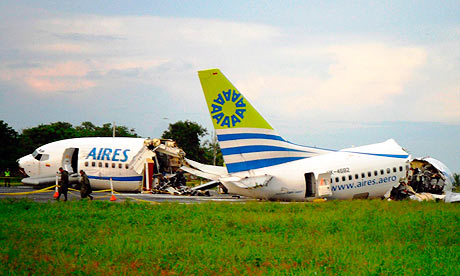
A mother and her infant son who disappeared in a plane crash in the dense jungle of western Colombia have been found alive and well five days later in what authorities have described as a “miracle”.
Nelly Murillo, 18, and her son Yudier Moreno, not yet one year old, were found on Wednesday close to the site where the Cessna 303 crashed on Saturday in thick vegetation near Quibdo in the province of Choco.
“It’s a miracle. It is a very wild area and it was a catastrophic accident,” Colonel Hector Carrascal, the commander of the Colombian air force in Antioquia, told AFP news agency.
“His mother’s spirit must have given him strength to survive.”Image for the news result
Murillo and her baby were taken by helicopter to a nearby hospital with minor injuries, said Carrascal, adding that he was stunned they were alive.
“The lady has wounds and minor burns and apparently the child is unharmed,” the Colombian air force said in a statement.
The plane’s pilot, Captain Carlos Mario Ceballos, died in the crash and rescuers found his body in the aircraft.
They discovered the doors of the plane ajar and suspected that survivors may have clambered out.
A 14-person search-and-rescue team scoured the dense forest before finding the mother and child.
The plane was travelling between Nuqui and Quibdo in western Colombia when it crashed.

-----June 25, 2015 : Aljazeera.com